


Why is food waste recycling necessary?
- Sophie Bell
- Mar 29, 2019
- 2 min read
Updated: Apr 4, 2019
Food waste is a global problem, however, it is not just food waste that should be considered when looking at this topic.
Food loss and waste should both be considered as they are related. Food loss typically happens in the production, storage, processing and distribution stages where food is thrown away or lost. Yet, food waste refers to food that is of good quality that does not get consumed and is thrown away.
Food waste refers predominately to the food which is thrown away from home.
The charts below consider which foods are most commonly lost or wasted and where predominately food is either lost or wasted.
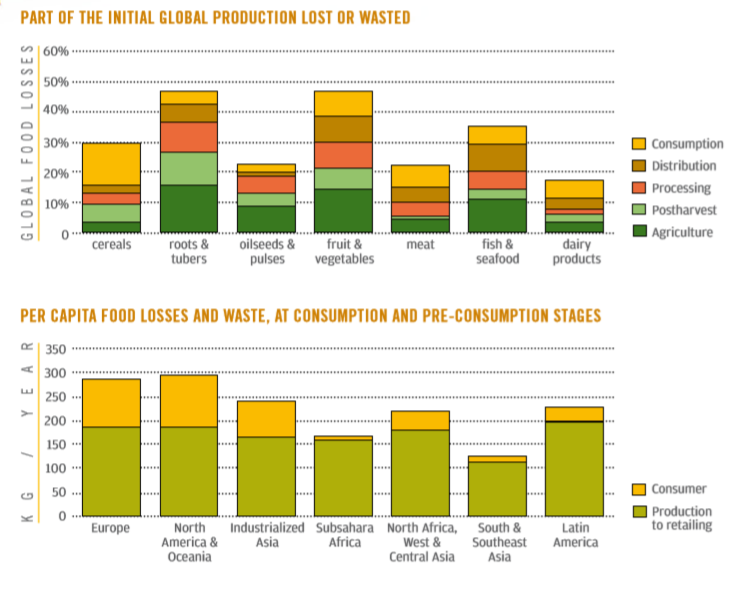
1) Over one third of all food globally goes to waste which amounts to around 1.3 billion tonnes per year.
2) 900 million people go hungry world wide and one billion people are overfed.
3) Food loss is expensive, with industrialized countries amounting waste that costs over £518 billion and developing countries are wasting over £236 billion.
4) Food loss also contributes to global warming. It is estimated that in 2007 food loss contributed 3.3Gtonnes of CO2 into the atmosphere.
5) Up to 70 percent of all fish caught by certain types of trawling are discarded.


UN Scheme to combat food poverty
The UN started a zero hunger challenge in 2012 setting out 5 elements to help achieve their sustainable development goals .
The challenge has been promoted on social media as participants share their zero waste journey using the hashtags #zerohunger and #foodwaste.
The aim of this is not only to help reduce food waste but aims to combat malnutrition and hunger poverty; through raising awareness of how food poverty is a problem throughout the world.
Social media allows for organisations such as the UN to spread news like this quickly and frequently.
Video showing #zerohunger on Instagram


Comments